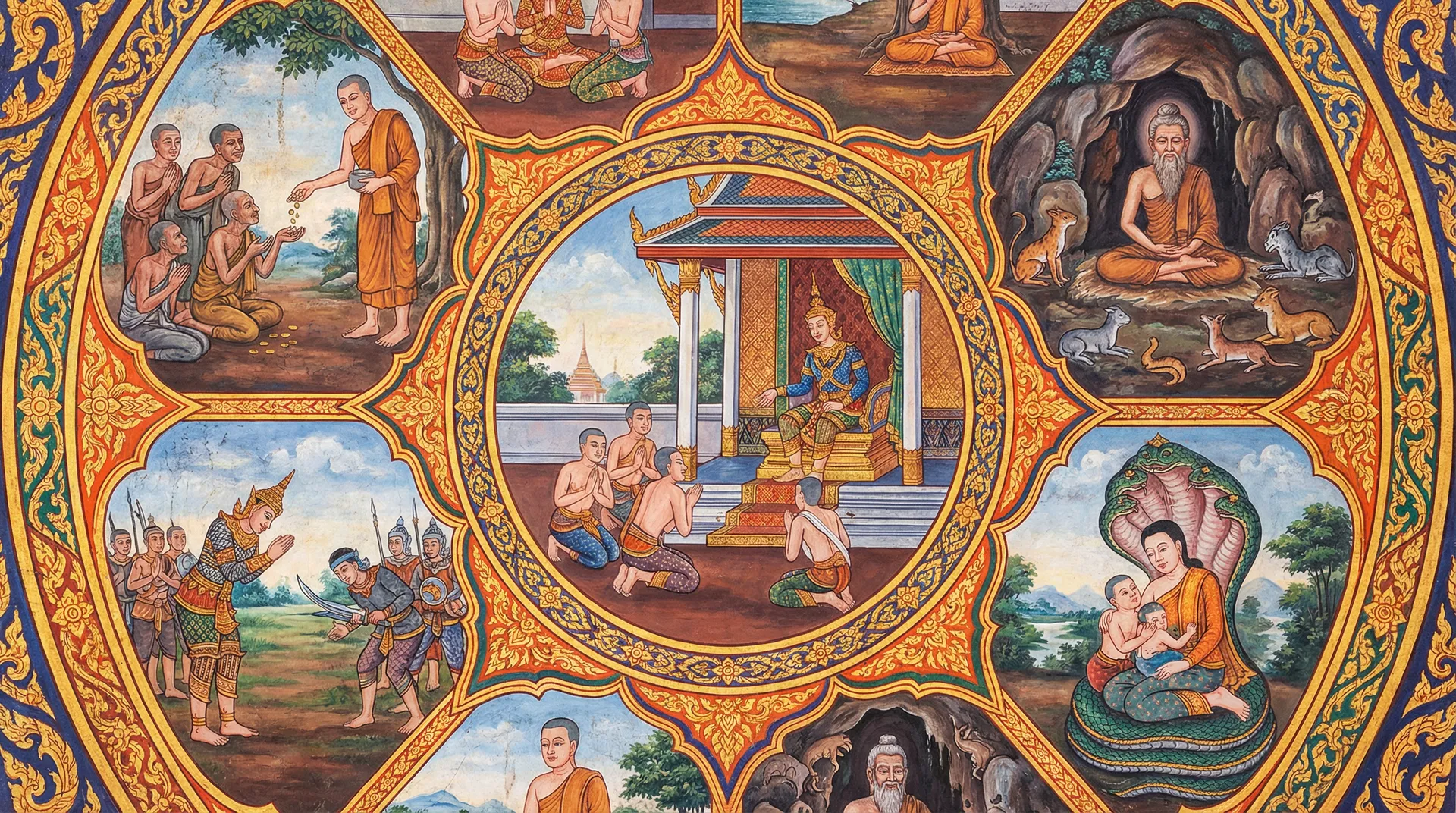
Mahaumagga Jātaka
Mahaumagga Jātaka
In the magnificent city of Mithila, there lived a Bodhisattva named Prince Bodhi. He was renowned throughout the land for his exceptional wisdom, sharp intellect, and profound understanding of all matters, both mundane and spiritual. His reputation for sagacity extended far beyond the borders of his kingdom, attracting scholars, wise men, and even kings from distant lands who sought his counsel. The king, his father, was immensely proud of his son but also recognized that Prince Bodhi's extraordinary abilities were meant for a greater purpose. One day, a severe famine struck the land. The granaries were depleted, and the people faced starvation. The king, despite his efforts, found himself unable to alleviate the suffering. He consulted his ministers, but they too were at a loss. In desperation, the king turned to his son, Prince Bodhi. 'My son,' the king implored, 'our people are dying. Our resources are exhausted. What wisdom can you offer us in this dire hour?' Prince Bodhi, with his characteristic calm and clarity, listened intently. He understood that the problem was not merely a lack of food, but a systemic issue and a lack of foresight. He proposed a radical solution. 'Father,' he said, 'we must not only find immediate relief but also prevent such a catastrophe from happening again. We need to implement a system of efficient food storage and distribution, coupled with strategic agricultural planning. We must also cultivate a spirit of mutual support and resourcefulness among the people.' The prince then outlined a detailed plan. He proposed the construction of large, well-ventilated granaries capable of storing grain for extended periods. He suggested diversifying crops and cultivating those that were more resilient to drought. He also advocated for the establishment of a public works program, where the unemployed could earn food and contribute to the kingdom's infrastructure. Furthermore, he emphasized the importance of educating the people about food preservation and conservation. The king, though initially daunted by the scale of the proposals, recognized the profound wisdom in his son's words. He gave Prince Bodhi full authority to implement his plan. With unwavering determination and exceptional organizational skills, Prince Bodhi set to work. He mobilized the people, inspiring them with his vision and dedication. He personally oversaw the construction of the granaries, ensuring they were built to last. He guided the farmers in adopting new agricultural techniques and encouraged cooperation. The famine, though severe, was eventually overcome. The carefully stored grains were distributed, and the new agricultural practices began to yield results. More importantly, the kingdom was transformed. The people learned the value of planning, resourcefulness, and collective action. Prince Bodhi's wisdom extended beyond managing crises; he also established institutions for learning, encouraging critical thinking and the pursuit of knowledge. He resolved disputes with impartiality and offered profound insights into the nature of suffering and happiness. His reign, following his father's, was characterized by unprecedented prosperity, peace, and enlightenment. The Mahaumagga Jātaka, therefore, is not just a story of overcoming famine, but a testament to the power of profound wisdom, strategic planning, and compassionate leadership in building a resilient and flourishing society.
The Mahaumagga Jātaka teaches us the immense value of wisdom, foresight, and strategic planning in overcoming challenges, especially societal ones like famine. It highlights that true leadership involves not just immediate solutions but also the creation of sustainable systems and the cultivation of resourcefulness and mutual support among the people. The story emphasizes that wisdom, when applied practically and with compassion, can transform suffering into prosperity and build a resilient society.
— In-Article Ad —
💡ၶေႃႈသွၼ်
Wisdom, foresight, and collective action are essential for overcoming societal challenges and ensuring prosperity.
ပႃႇရမီႇ: Wisdom (Paññā)
— Ad Space (728x90) —
ၸႃႇတၵဢၼ်ၼႃႈသူၼ်ၸႂ်
 472Dvādasanipāta
ၵေၭၵၯၑၫၬၭၥၦၰ
ၦၱၫၬၭၥၦၰၭၥၦၱၭၥၦၱၭၥၦၱၭၥၦၱၭၥၦၱၭၥၦၱၭၥၦၱၭၥၦၱၭၥၦၱၭၥၦၱၭၥၦၱၭၥၦၱၭၥၦၱၭၥၦၱၭၥၦၱၭၥၦၱၭၥၦၱၭၥၦၱၭၥၦၱၭၥၦၱၭၥၦၱၭၥၦၱၭၥၦၱ...
💡 สตรีก็สามารถบรรลุธรรมอันสูงสุดได้ หากมีจิตใจที่แน่วแน่และไม่หลงใหลในกามคุณ
 136Ekanipāta
ၵႅပ်ႉဢုတၑၒၐၕၑၗ
ၼႂ်းတႄႉ ၵႄႈၵၢၼ်ၒၐၗၗၗၗၗၗၗၗၗၗၗၗၗၗၗၗၗၗၗၗၗၗၗၗၗၗၗၗၗၗၗၗၗၗၗၗၗၗၗၗၗၗၗၗၗၗၗၗၗၗၗၗၗၗၗၗၗၗၗၗၗၗၗၗၗၗၗၗၗၗၗၗၗၗၗၗၗၗၗၗၗၗၗ...
💡 ความเจริญรุ่งเรืองที่แท้จริงนั้น ไม่ได้มาจากการปกครองที่ยุติธรรมเพียงอย่างเดียว แต่ต้องมาจากการรักษาธรรมเนียมอันดีงาม การประพฤติตนอยู่ในศีลธรรม และการเคารพในสิ่งศักดิ์สิทธิ์.
93EkanipātaAssaka Jataka
Assaka JatakaIn the ancient kingdom of Kasi, nestled beside the gentle flow of the River Ganges, sto...
💡 ความกล้าหาญและความสามารถในการแก้ไขปัญหา จะนำมาซึ่งความสงบสุขและความเจริญรุ่งเรือง
70Ekanipātaၵုရုင်ႇၵႃႊၵ႘႖
ၵႃႊၵ႘႖ ၵႃႊၵ႘႖ ၼႂႊၵ႘႖ ၵႃႊၵ႘႖ ၵႃႊၵ႘႖ ၵႃႊၵ႘႖ ၵႃႊၵ႘႖ ၵႃႊၵ႘႖ ၵႃႊၵ႘႖ ၵႃႊၵ႘႖ ၵႃႊၵ႘႖ ၵႃႊၵ႘႖ ၵႃႊၵ႘႖ ၵႃႊၵ႘႖ ၵႃ...
💡 การหลงในรูปโฉมและคำหวาน ย่อมนำมาซึ่งภัยอันตราย
148EkanipātaMahasutasoma Jataka
Mahasutasoma JatakaIn the magnificent city of Indapatta, ruled a king named Pothila, whose reign was...
💡 ความรักที่แท้จริงนั้น ไม่ใช่เพียงแค่ความสุขสบาย แต่ยังรวมถึงความเสียสละและความอดทนด้วย
 262Tikanipāta
မ
မႁႃးသူ ပၼ ႇ ၵူၼ်းၼမ်ႉၵၼ်၊ ၵူၼ်းမႃးၵၼ်၊ ၵူၼ်းၵႃႉၵၼ်၊ ၵူၼ်းႁၵ်ႉၵၼ်၊ ၵူၼ်းပဵၼ်ၵၼ် ၼႂႂႈၵၢၼ်း ၵႃႉၵၼ် ၵႃႉ...
💡 ความดีที่ทำไว้ ย่อมส่งผลดีตอบแทนเสมอ ไม่ว่าจะเป็นในปัจจุบันหรืออนาคต การทำบุญทำทาน การช่วยเหลือผู้อื่น เป็นการสร้างบุญบารมีที่ยั่งยืน อันจะนำมาซึ่งความสุขความเจริญ และคุ้มครองเราจากภัยอันตรายต่างๆ
— Multiplex Ad —